Photography exhibition offers rare glimpse into underground world of the Central Interceptor
27 May 2026Most Aucklanders will never step inside the Central Interceptor, but a new photography exhibition offers a rare glimpse into the vast underground world built to help protect the city’s waterways for generations.
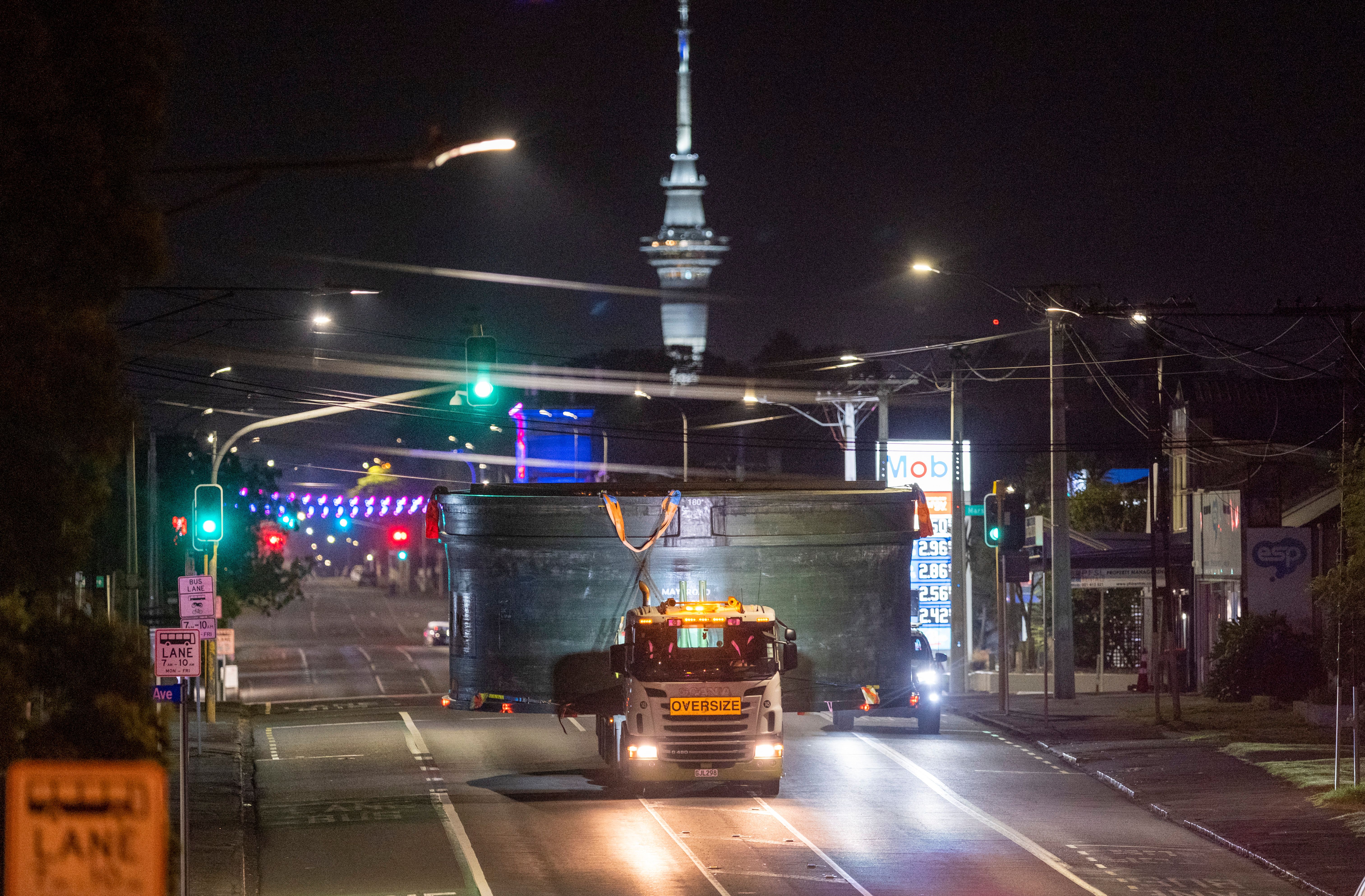
Watercare’s Central Interceptor exhibition takes viewers deep inside the massive infrastructure that runs beneath the city from Point Erin in Herne Bay to the Māngere Wastewater Treatment Plant through the incredible imagery of award-winning photographer Simon Runting.
The exhibition is part of the Auckland Festival of Photography and features 30 large-sized images displayed on the hoarding at the project’s Point Erin site, as well as a full online gallery.
Runting has documented the entire construction phase of the 16.2km wastewater tunnel and two link sewers, which began in 2019.
“I’ve been shooting the project the whole way through, including the first dawn blessing at the Māngere Wastewater Treatment Plant before the construction work began. It’s been an absolute privilege to record it all,” he says.
“I hope the photos will provide insight into what was a massive undertaking the Central Interceptor was for Watercare and the Ghella Abergeldie Joint Venture team as it will never be seen again once it is in operation.”
Watercare chief executive Jamie Sinclair says the extraordinary photos provide an insider’s view of a vital piece of infrastructure that will serve Auckland for generations to come.
“This exhibition captures not only this once-in-a-generation tunnel but also the many people behind its successful delivery - spotlighting the scale and engineering as well as the culture and the heart behind it."
The $1.66 billion tunnel will become fully operational in mid-late 2026 and was delivered on time and with an excellent safety record.
"The Central Interceptor project is exactly the kind of essential investment Auckland needs, practical infrastructure that fixes a real problem. This tunnel will reduce overflows into our waterways, improve public health, and make the system more resilient for the long term,” says Auckland mayor Wayne Brown.
“That’s real value for Aucklanders. With my engineering background, I know how complex this kind of job is, but it’s the sort of investment that will pay off for decades.”
The exhibition will run from 29 May to 30 June, and the photo display can be viewed at the Central Interceptor’s Point Erin site at 94 Shelly Beach Road, next to the Point Erin Pools. The full gallery is on the Watercare website.
About the Central Interceptor
Watercare is investing in long-term infrastructure and planning ahead to support a growing Auckland for generations to come, while protecting the health of water, the environment and the communities connected to it.
The Central Interceptor project is New Zealand's largest wastewater project, and it will ultimately improve the health of the waterways and beaches in central western suburbs by reducing wet weather overflows.
The 16.2 km tunnel from Point Erin in Herne Bay to the Māngere Wastewater Treatment Plant is now complete, as well as two link sewers that will capture wastewater flows from Blockhouse Bay, Avondale, Mt Roskill, and Mt Albert.
The southern half of the tunnel has been live since the start of 2025 and as of March 2026, it has saved an estimated 450,000 m3 of combined wastewater/stormwater from spilling into the environment.
The northern half of the tunnel is due to go live in mid-late 2026, and the full environmental benefits of the project will be seen when the associated Herne Bay Collector works are finished by the end of 2028.
Wet weather overflows have been a longstanding challenge for Auckland’s inner-city suburbs such as Herne Bay and St Mary’s Bay. That’s because the stormwater and wastewater flow into the same network of pipes which were designed to overflow in wet weather.
Work is under way for the Herne Bay Collector, which will be a 2.1m-diameter tunnel that runs for approximately 1.7km and will be created using a micro tunnel boring machine. It will have seven main shafts and three intermediate shafts connecting into the network infrastructure that will improve water quality in the Waitematā Harbour and surrounding coastal areas.