Public feedback guides approach to Auckland’s biosolids future
01 May 2026Watercare is progressing a 10-year programme to scope, design and construct Auckland’s next biosolids disposal facility.
With a project of this magnitude, there will be some time between progress milestones. However, we are committed to providing timely updates as the programme of work progresses and we see the project come to fruition. This is the first of these updates.
What’s the biosolids programme about?
As Auckland’s water and wastewater utility, Watercare is responsible for safely collecting, treating and managing wastewater for the city. Biosolids are the unavoidable, soil-like ‘leftovers’ from the wastewater treatment process.
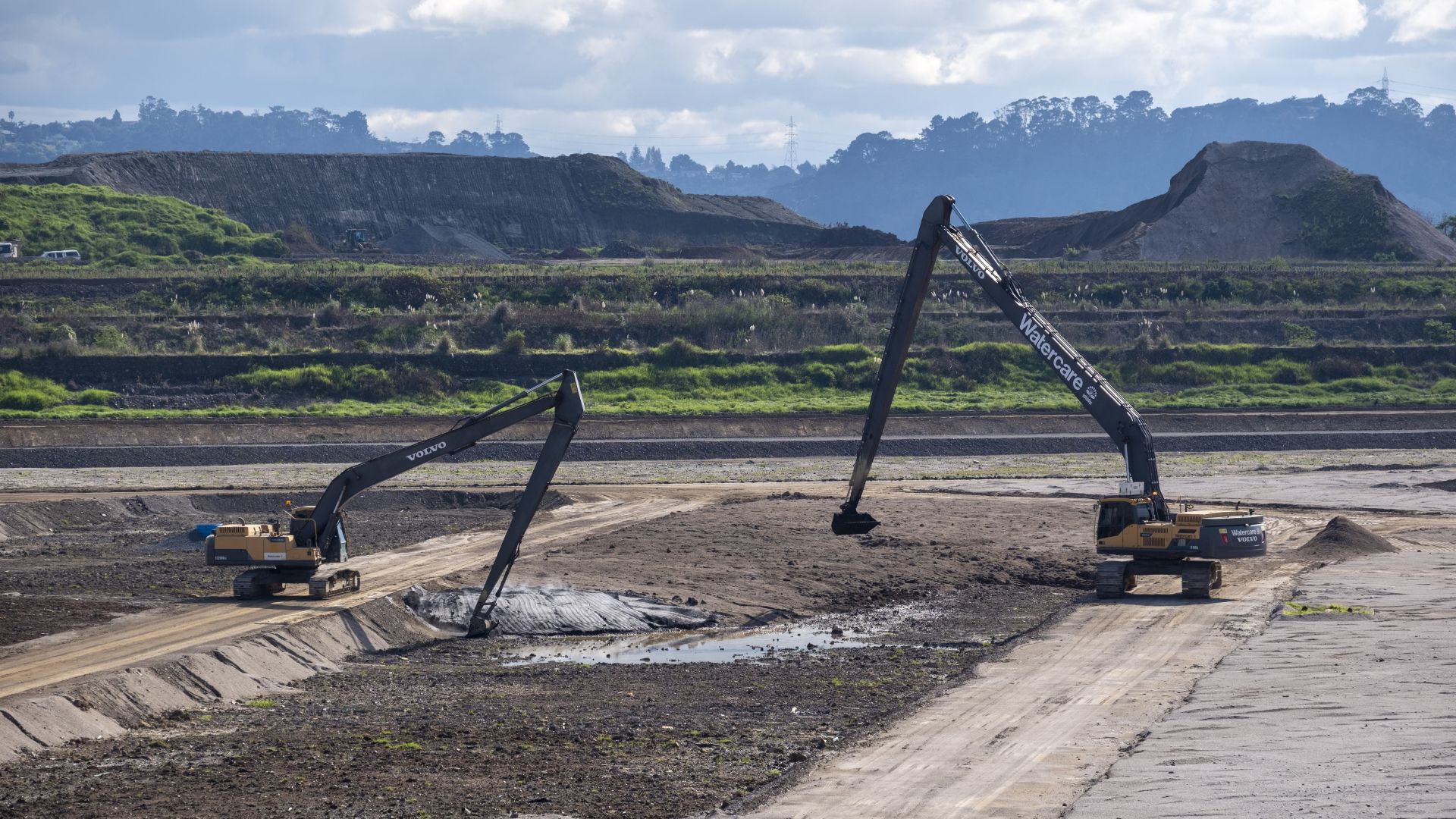
All of Auckland’s 18 wastewater treatment plants produce biosolids. At the moment, three quarters of Auckland’s wastewater is treated at Māngere Wastewater Treatment Plant, and the biosolids from this plant are being used to rehabilitate an area on nearby Te Motu a Hiaroa (Puketutu Island), which was quarried from the 1950s to the early 2000s.
By 2035, this rehabilitation project will be complete and Auckland will need a new, proven solution in place capable of handling more than 175,000 tonnes of biosolids each year.
Throughout 2026, the project team will be working to weigh up and narrow down the two primary options – incineration and landfill.
Engagement summary report
Since biosolids are, quite literally, everyone’s business, Watercare wants to know what matters most to our communities.
To help guide us as we evaluate potential solutions, we asked Aucklanders in late 2025 what they value, and what they’re concerned about when it comes to the way Watercare plans for Auckland’s biosolids management into the future.
This report outlines the feedback received through this early public engagement. It is not a technical assessment or a decision about the future biosolids solution. Rather, it is a summary of early engagement and how it will inform the work that comes next.
This engagement focused on helping people understand the issue, testing early views on the two realistic long term options, and hearing what matters most to communities as future decisions are made.
As well as summarising what we heard, the report also outlines what happens next.
Over the coming decade, there will be further technical work, option development, environmental and technical assessments, design, consenting and funding before a final solution is confirmed.
We’ll continue to work closely with mana whenua and Aucklanders throughout this process, and we’re committed to keeping everyone informed about how the project is shaping up.
You can find information about planning for Auckland’s Biosolids Future at watercare.co.nz/biosolids.