Herne Bay collector tunnel
A project aimed at delivering cleaner beaches on the Waitematā Harbour by 2028.
Duration
2025 - 2028
Location
Herne Bay
Status
Construction
Newsletters
Project overview
The Herne Bay Collector pipeline will collect wastewater and stormwater from the lower Herne Bay area and take it to the Central Interceptor tunnel now lying beneath Point Erin Park. From there, it flows on to Watercare’s Māngere Wastewater Treatment Plant for safe treatment.
The project forms part of Watercare’s broader Western Isthmus Water Quality Improvement Programme (WIWQIP), a joint initiative with Auckland Council’s Healthy Waters department. Its goal is to significantly reduce wastewater overflows and improve stream and beach water quality in the city’s western isthmus.
Project update
On 6 May 2026, Watercare signed a contract with Italian tunnelling specialists Ghella to construct the Herne Bay Collector (HBC), a nearly 1.7km long, 2.1m diameter wastewater tunnel. Two days later, a karakia and cultural induction led by Ngāti Whātua Ōrākei was held for the site team to acknowledge the contract signing and help ensure a strong official start to the project.
The team from Ghella has been working on early enabling works for several months, at various sites. These works help to prepare for construction stretching from the southwest corner of Point Erin Park and along Sarsfield Street to Marine Parade. The future construction sites are largely in the roadway along the alignment of the tunnel. Final project construction is expected to be completed in late 2028.
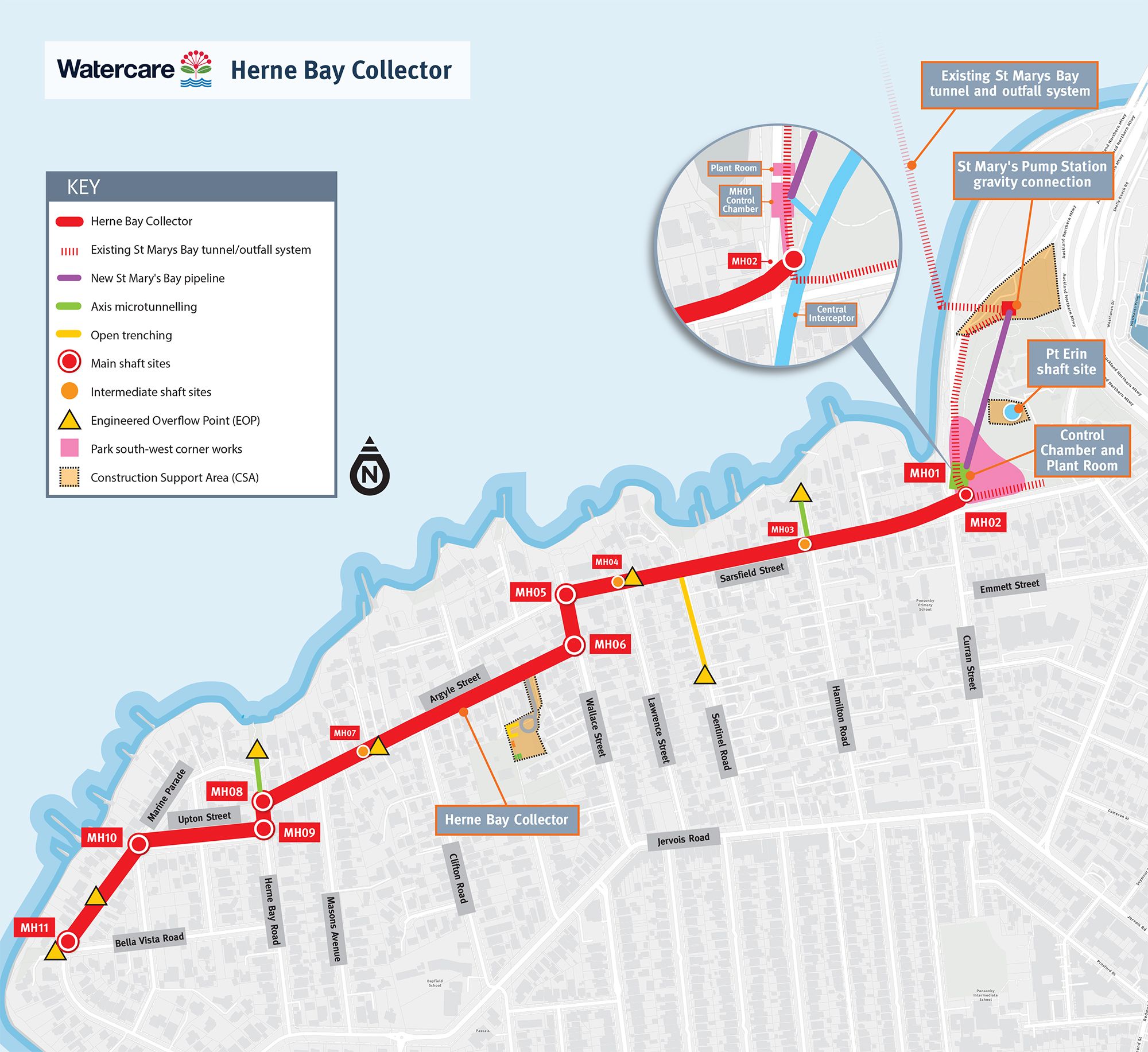
There are 10 shafts, with depths of between 10m and 23m. Seven of these shafts are launch and/or retrieval shafts for the micro-Tunnel Boring Machine (mTBM) and three are intermediate shafts between 10m and 23m deep. Most of the shafts, referred to as manholes (MH) on our drawings and maps, will connect to existing engineered overflow points (EOPs), which discharge wastewater into the environment in wet weather events.
Each site and shaft is unique in some way and the average time for construction will be some two years. You will notice several different stages in the construction process and our timelines are approximate as there are many factors that can impact the programme. These include unknown below-ground services and conditions, specialist workforce availability and wet weather.Residents close to one of the ten construction sites will likely be most impacted by construction and disruption to traffic flows. We will work closely with you to try and mitigate the impacts of this disruption.
What does construction look like – the different stages
Service relocations: all the services at our shaft sites need to be relocated around the excavation area. There are many different services including fibre, gas, electricity, water and stormwater. This work can be quite disruptive as the relocated services are often moved to the road berms. While Ghella carries out excavation and duct installation for the services, the services operators (Chorus etc) are responsible for completing the final connections. We are reliant on their work schedules and availability and often this work needs to be carried out at night to minimise service disruptions to customers.
Removal of blue stone kerbing: involves concrete cutting, individually marking each stone and confirming the GPS co-ordinates before storing them off-site ready for reinstatement when construction is complete. The stone kerbs must be reinstated in their current locations to maintain the historical context of the area as per our Resource Consent.
Site establishment: involves installing temporary fences and access which may include removing the raised speed tables and constructing new alternate roads using the berms. These temporary roads are necessary to ensure property owners have vehicle access. We also install water treatment plants, muck bays and other site facilities for our workforce.
Temporary works: include scaffold installation, guide wall construction, pile cage delivery and secant bored piling. The latter is drilling overlapping reinforced concrete piles to form a retaining wall around the shaft for safe excavation. These are temporary piles and are removed when tunnelling and construction have been completed.
Permanent works: involve tunnelling excavation, installation of tunnel liners and constructing any permanent chambers. We also install mechanical and electrical systems with the bulk of these in the permanent plant room in the southwest corner of Point Erin Park.
Site reinstatement: this final stage includes removing temporary services and backfilling and reinstating any excavations. We re-install the blue stone kerbing and disconnect any services used only for construction. We then replace the permanent kerb and channelling and berm areas, and re-asphalt and repaint road markings as needed.
Main works
Ghella will construct a tunnel for approximately 1.7km using several tunnelling methodologies. These are: a micro-Tunnel Boring machine, a nano-Tunnel Boring machine, HDD (horizontal directional drilling) and hand digging.
The main 2.1m-diameter tunnel will pass beneath the streets at depths ranging from 9 to 22 metres. We will also install smaller pipelines along Marine Parade (600mm in diameter) and local connections to the existing engineering overflow points (between 200mm to 450mm in diameter).
The 10 tunnel shafts vary in diameter depending on their purpose e.g. launch and/or retrieval shaft or intermediate shaft. Some shafts are also intercepting shafts to enable connections to existing engineered overflow points (EOPs) - these are manholes in the roadway or on private property.
We are building a permanent control chamber (named MH01) in the southwest corner of Point Erin Park. This contains large gates controlling the wastewater flow into the Central Interceptor tunnel. Its operations are controlled by the permanent plant room nearby.
Auckland Council’s Healthy Waters department is seeking consent to install a 375mm-diameter stormwater pipeline connection between St Mary’s Pump Station and the Pt Erin control chamber. This will be constructed using horizontal trenchless drilling. From there it will discharge into the Central Interceptor. (See project map.) Watercare and Ghella will deliver these works as part of the Herne Bay Collector project, working within the existing site compounds at 94A and 94B Shelly Beach Road and the south-west corner of Pt Erin Park.
We will also establish three temporary Construction Support Areas (CSAs). One is beside the Curran Street motorway on-ramp and another is in Salisbury Reserve. We will shortly confirm when we will begin the two-year consented use of the latter site. The third CSA is at the existing Central Interceptor site next to Pt Erin pool.
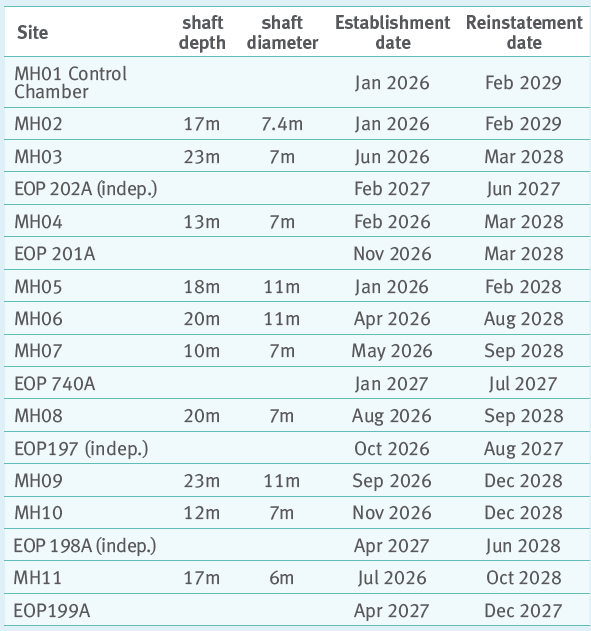
Proposed construction programme
Project Map
Please click here for full size map
Tunnelling
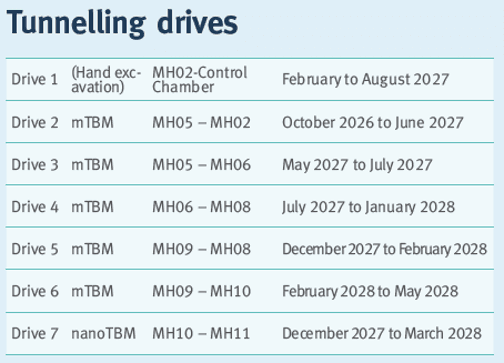
Ghella will deploy an Earth Pressure Balance (EPB) micro-Tunnel Boring Machine (mTBM) for the 2.1m diameter Collector tunnel. This well-proven methodology uses pipe-jacking, which enables trenchless (underground) installation of pipelines with minimal disruption to the surface environment.
The mTBM is equipped with a rotating cutting wheel to loosen soil at the tunnel face. Then an excavation chamber mixes the loosened soil with foam to form a mouldable slurry. This is transferred by screw conveyor to a belt conveyor which transports the soil, also called spoil, into skip bins which are transported to the bottom of the shaft via an electric locomotive. These bins are then lifted out of the shaft by crane to be transported on trucks away from site.
Thrust cylinders push the mTBM forward and install precast concrete pipes. Once the pipe string is pushed into place, grouting is undertaken where necessary to ensure full ground-to-pipe contact and to provide long-term stability of the pipeline. The combined action of the pipelining and grouting effectively reinstates ground stability, leaving the surrounding soil mass in a condition comparable to its original state.
Traffic Management
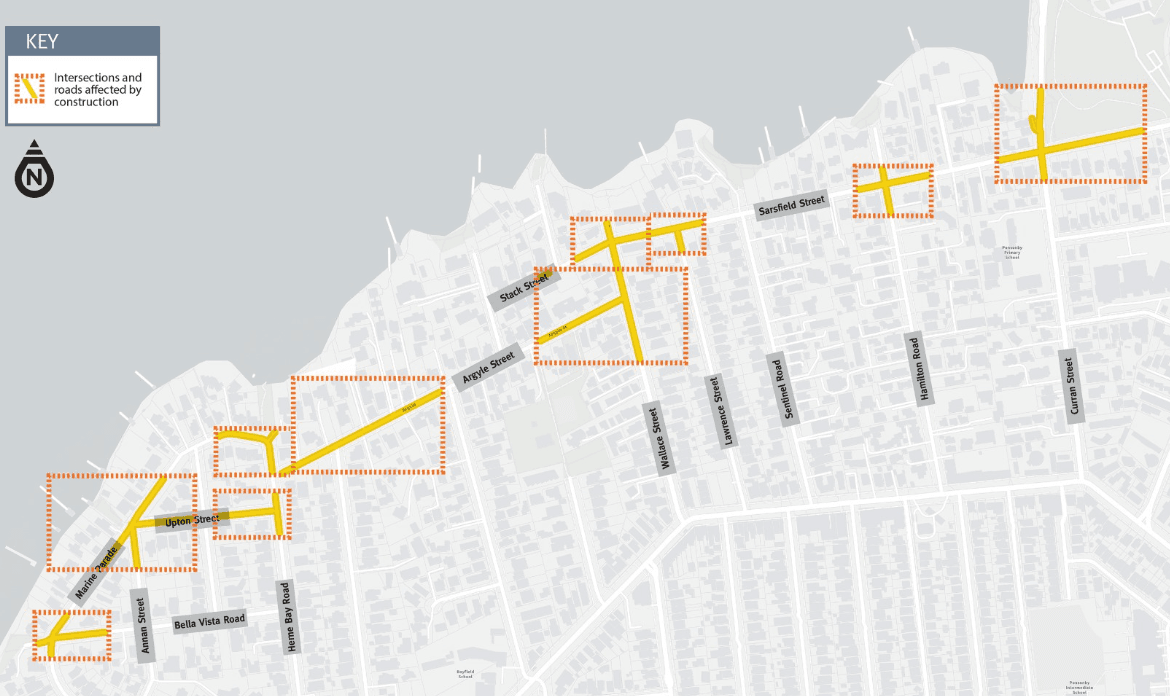
Traffic management is one of the most obvious activities as it impacts most of the streets in the area, due to the road network layout in the suburb. Our traffic management is organised in a staged approach to suit the activities on site whilst minimising the impact to pedestrians and road users as much as possible. This means a lot of dynamic changes for the different construction stages. Once the sites have been fully set up traffic controls will be more settled. These largely focus on keeping the public safe, managing traffic flow, truck movements and space constraints around the site.
To reduce the number of signs across the Herne Bay area and reduce confusion about speeds near our sites, a 30km speed limit is in force for the duration of the project. Other temporary changes include removing on-street parking around sites and providing changed pedestrian and vehicle access using berms and roadways. Property access will be maintained for all residents. If your vehicle access is affected at any time, we will be in touch with you directly. Residents will be informed of traffic management closures and changes. Please follow all traffic signs and instructions and adhere to the road code, for your safety and ours.
Monitoring
Seasonal movement can lead to building and ground settlement as the soil naturally shrinks and swells as moisture content changes between seasons. Settlement due to construction can occur due to the drawdown of groundwater as water seeps into an excavation. There are several controls in place to track possible settlement.
Our settlement monitoring includes using satellite data which regularly monitors settlement across Herne Bay with a database of readings over the past two years as a baseline. We also carry out conventional monitoring using stickers and survey markers to monitor the ground levels.
Stakeholder engagement
We will work closely with anyone affected by the construction of the Herne Bay Collector. Following this major update bulletin, which is distributed by mail drop and email, regular bulletins will be distributed via Watercare’s automated email system. We encourage you to sign up for these. (See below)
In addition, more focussed notices will be delivered to those impacted by activities and changes around individual shaft sites. From time to time, we will also hold drop-in sessions at our construction sites to provide an opportunity to find out more about our work in person.
Salisbury Reserve temporary storage facility
Salisbury Reserve has been consented for use by the Herne Bay tunnel project as a temporary storage facility.
St Marys Bay and Herne Bay separation projects
These projects were earlier works that focused on separating the old, combined stormwater and wastewater pipes.
Herne Bay collector tunnel consent documents
Herne Bay collector tunnel consent documents
Consent Lodgement - July 2023
1 Herne Bay Trunk sewer AEE pdf
Appendix A Permitted Activities pdf
Appendix B Proposed Conditions pdf
Appendix C Records of Title pdf
Appendix D1 Geotechnical Assessment pdf
Appendix F Integrated Traffic Assessment pdf
Appendix G Arboricultural Assessment pdf
Appendix H Archaeological Assessment pdf
Appendix I General Arrangement Drawings pdf
Appendix J Construction Methodology pdf
Appendix K1 Noise and Vibration Assessment pdf
Updated Consent Lodgement - August 2023
Methodology Cover Letter - 8 August 2023
s92 Updated Herne Bay Trunk Sewer Assessment of Environmental Effects - 7 August 2023 v3
s92 Proposed Conditions - 7 August 2023
Construction Methodology - 8 August 2023
Draft of Construction Noise & Vibration Management Plan - 3 August 2023 v1
Construction Noise & Vibration Assessment - 3 August 2023 v1
s92 Response & Updated Documentation - October 2023
Resource Consent Application - s92 Request - 1 September 2023
s92 Response Letter - 5 October 2023
Attachment A: Groundwater & Settlement Assessment Report - September 2023 v4
Attachment B1: Erosion & Sediment Control- Site Plan - 22 September 2023 v2
Attachment B2: Draft Erosion & Sediment Control Plan Report - 22 September 2023 v2
Attachment C: Construction Noise & Vibration Technical Assessment - August 2023 v1
Attachment D: Construction Noise & Vibration Management Plan - September 2023 v1.1
Attachment E1: CSA-1 Concept Layout Plan
Attachment E2: CSA-2 Concept Layout Plan
Attachment F - Herne Bay Tunnel Draft CTMP V1 24/10/23 pdf
Attachment G: Arboricultural Assessment of Effects - 9 June 2023
Attachment H: Proposed Salisbury Reserve Reinstatement Concept Sketch - 7 September 2023
Attachment I: Approved Reserve Reinstatement Plan 94a - 94b Shelly Beach Road - 23 March 2021
Attachment J: Street Tree Replanting Memo & Plans - 7 September 2023
Herne Bay Trunk Sewer: Amendments To Application - 13 October 2023
s92 Further Information Responses - November - December 2023
Hearing Evidence
Hearing Evidence of Andrew Clarke (Structural Engineering) - 2 February 2024
Hearing Evidence of Andrew Deutschle (Corporate) - 2 February 2024
Hearing Evidence of Colin Shields (Transport) - 2 February 2024
Hearing Evidence of Jeremy Elley-Brown and William Hung (Consultation) - 2 February 2024
Hearing Evidence of Julia Wick (Landscape and Visual) - 2 February 2024
Hearing Evidence of Maree Drury (Planning) - 2 February 2024
Hearing Evidence of Mark Thomas (Geotechnical) - 2 February 2024
Hearing Evidence of Rory Bishop (Construction Methodology) - 2 February 2024
Hearing Evidence of Sean McBride (Arboricultural) - 2 February 2024
Hearing Evidence of Sharon Yung (Noise and Vibration) - 2 February 2024
Hearing Evidence of Stephen Webster (Corporate) - 2 February 2024
Hearing Evidence Drawings
2. Longitudinal Section - Trunk Sewer.pdf
3. Longitudinal Section - Local Network Sheet 1.pdf
4. Longitudinal Section - Local Network Sheet 2.pdf
5. Longitudinal Section - Local Network Sheet 3.pdf
6. Longitudinal Section - Local Network Sheet 4.pdf
7. Construction Plan - Tunnel Shaft Locations.pdf
8. Construction Plan - Interception Shaft Locations.pdf
9. Land Requirement Plan (CSA1).pdf
10. Land Requirement Plan (CSA2).pdf
11. Street Tree Replanting Plan.pdf
12. Salisbury Reserve Plan (CSA1) as per Appendix 2 of the evidence of Julia Wick.pdf